Common Pine Tree Diseases
Pine trees may not be the most common tree across Buffalo and Western New York, but we are always getting calls about them from our customers, and they are vulnerable to a variety of diseases that affect their needles, bark, branches, and overall health. This part of New York State gets hit with many different variations of seasonal weather and conditions like cold and snowy winters, overly wet springs, and very hot and humid summers. These conditions are always changing and can create an environment that fungi and other diseases take over and bloom to uncontrollable levels. We also know that pine trees are a BIG purchase for those who want to get a Christmas tree and plant it in their yards when the holidays come around or use it inside, and we want you to know how to spot these diseases and call us for help! Below, we’ll cover some common pine tree diseases along with their symptoms.
Here are some of the most common diseases that can affect your pine trees.
Needle Blight and Needlecast
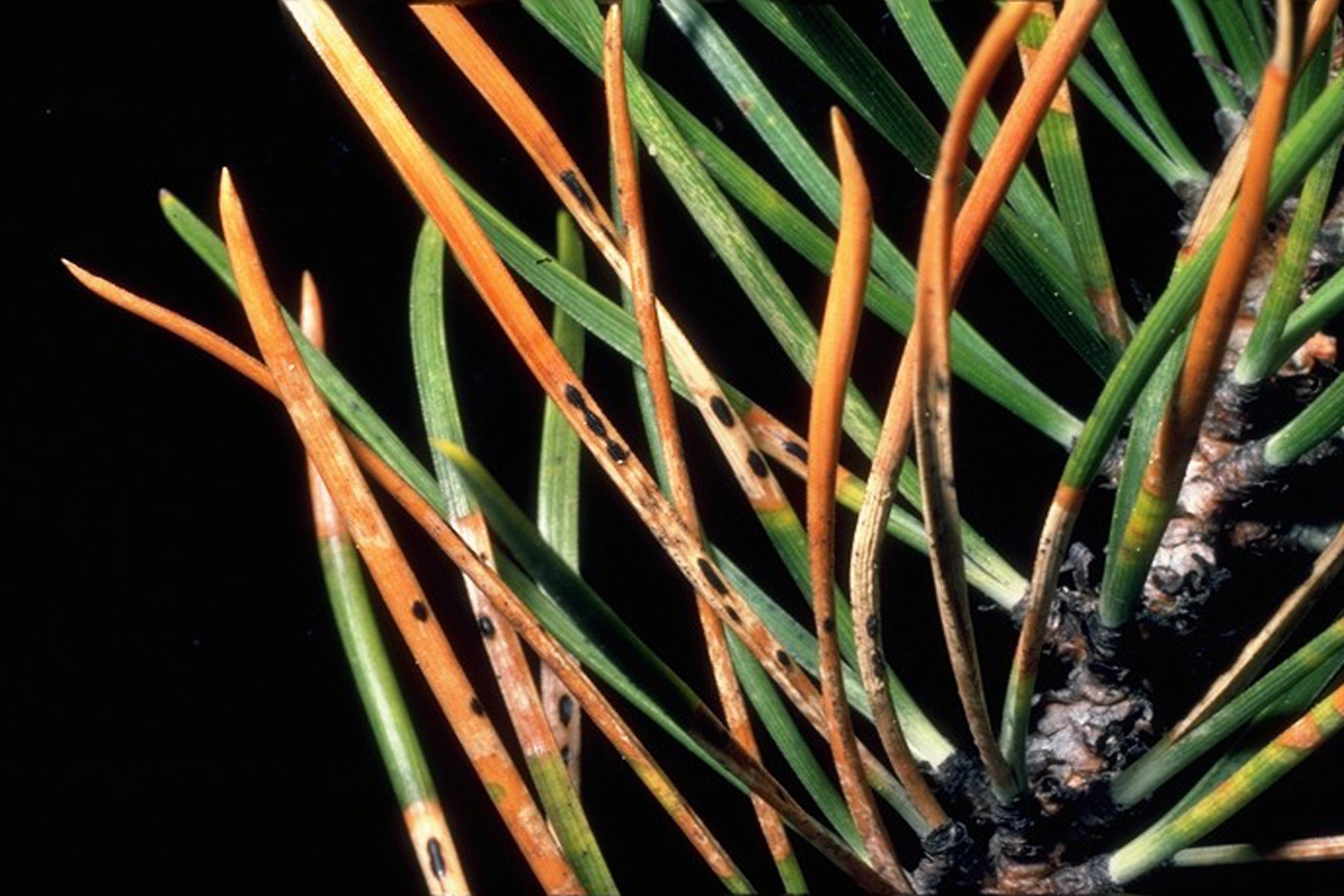
The name gives it away, but Needlecast and Needle Blight are fungi that affect the pine needles on a pine tree. The fungi turn the needles brown, and they will start to drop prematurely. Certain conditions, such as a pine tree not being planted correctly or something like drought, can cause this fungus to sprout. These diseases affect most of the different types of pine trees (spruce trees too, with their needles).
Some symptoms you might see with Needlecast and Needle Blight include:
- Brown coloring and needle drop prematurely
- A canopy that’s quickly thinning
- Tiny black bumps or dots (may require a magnifying glass to see)
- Branch dieback, where if a branch loses most of its needles in a 3-4 year time span, the branch will eventually die
As a clarification, while Needlecast and Needle Blight feature a lot of the same symptoms, they both target trees differently. Needlecast primarily targets older needles, while Needle Blight targets younger growth.
Pine Wilt
Pine wilt is a highly lethal disease of pine trees caused by a nematode (a type of roundworm). This nematode will damage a pine tree based on conditions relating to moisture and temperature. These nematodes spread by being transported on the backs of pine sawyer beetles. When the tree is fed on, the systems involved with water conduction start to fail, and this causes wilting (losing rigidity and starting to droop toward the ground) in dry conditions.
This tree disease shows up more during spring and blooms in the summer, and when it does, you’ll notice symptoms like brown coloring in the needles; the needles might stay on the tree for several months without dropping; and finally, there will be a loss of resin in the inner part of the tree’s bark and branches due to losing water.
Annosus Root Rot
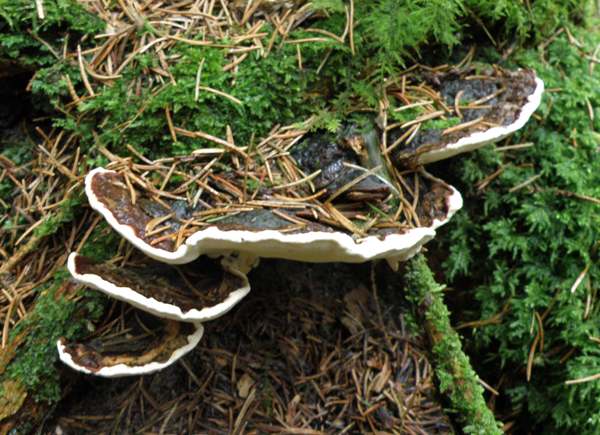
There are many different forms of root rot that affect plants and trees, and Annosus root rot is a particularly destructive form of it for pine trees. This fungus grows down in the stump roots of a tree (with stumps that are freshly cut). This disease eats away at the very structure of what keeps a pine tree stable and upright. One of its trademark features is the white and brown mushrooms that form at the base of the tree. This can spread across multiple trees if close together.
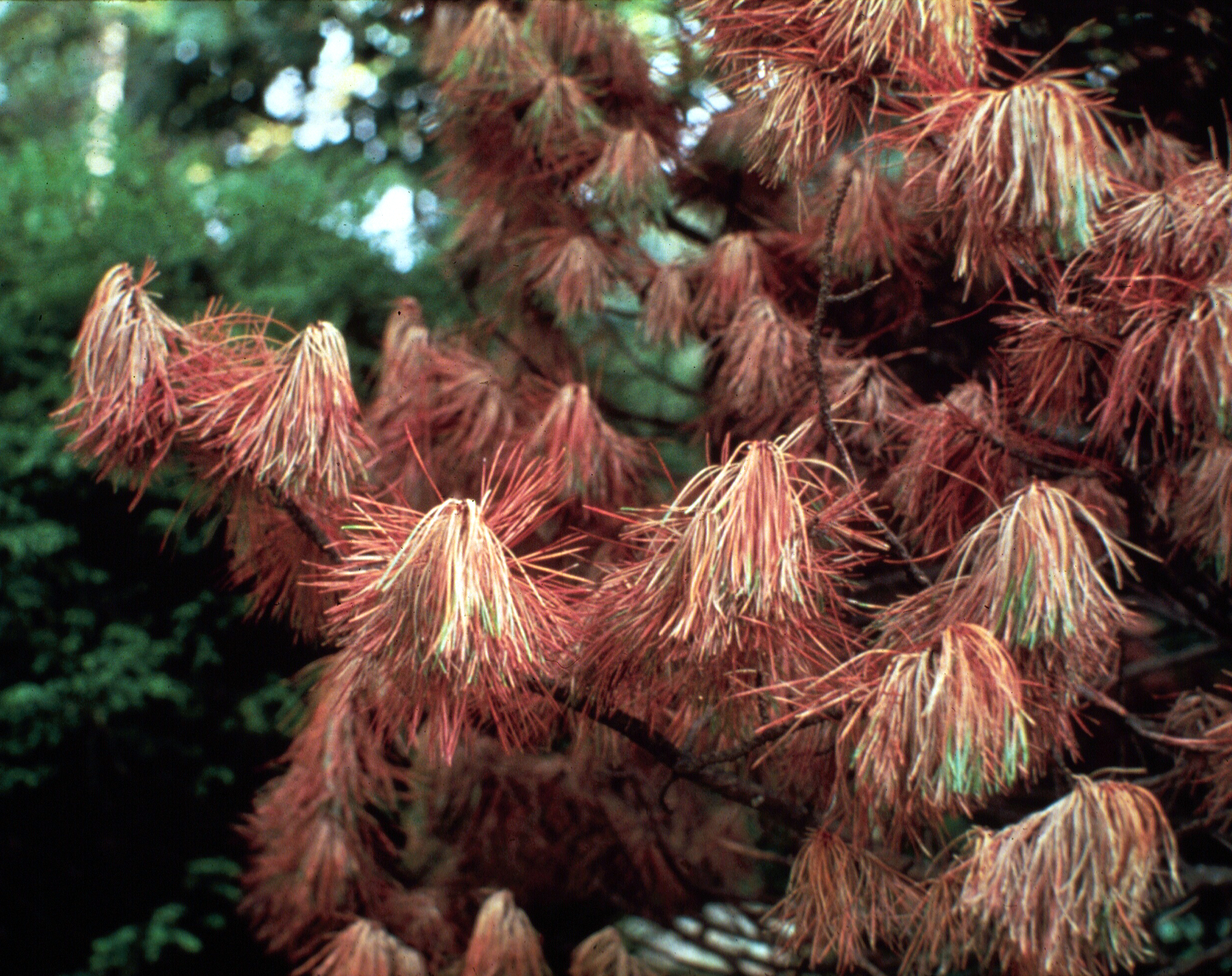
The first signs of Annosus root rot will start with the needles on the pine trees turning light green or yellow in color. Needles that are older will drop prematurely (as you see in the photo on the right), and any remaining needles are going to clump up in tufts at the tips of shoot branches. That means that needles will grow together in bunches at the tips of the branch. You might also notice the wood on the tree is soaked in resin too.
Fusiform Rust
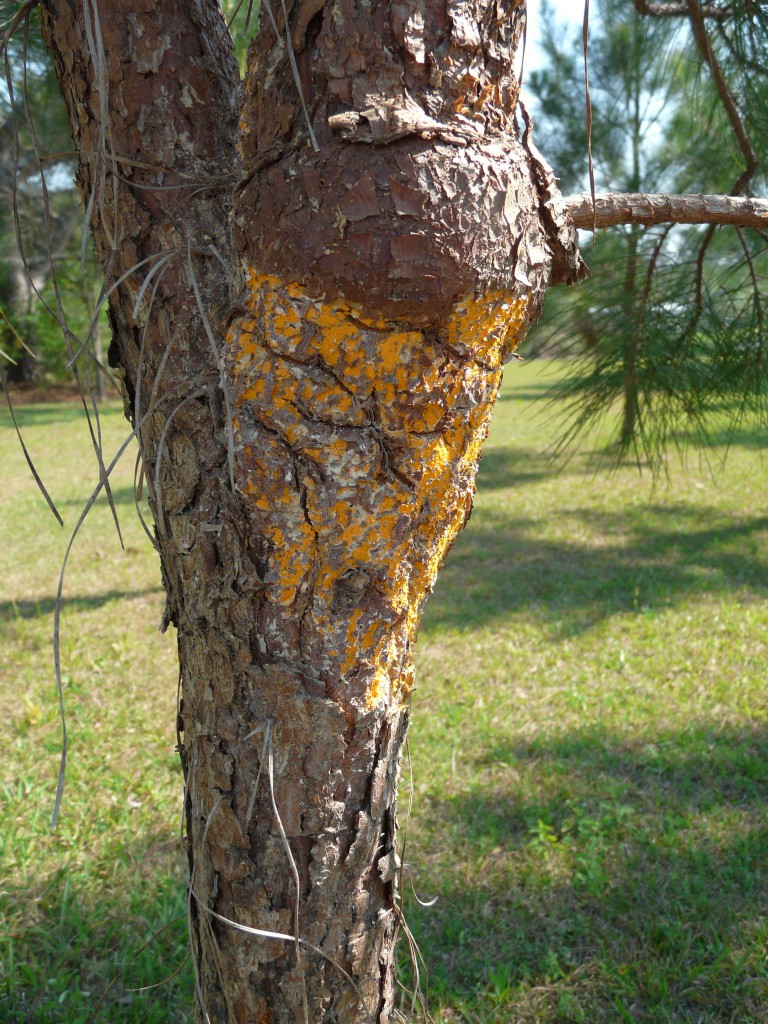
If you have any younger pine trees planted around you, be on the lookout for Fusiform rust. This tree disease is caused by a fungus that produces spindle-shaped galls on the branches and stems. In effect, this weakens the trees and can lead to their death. Now, this is a disease that reportedly is not found as much here in the northeastern part of the United States, but it’s still important to remain cautious just in case it is spotted in a rare instance. Weather conditions and the environment are constantly changing these days, and anything can happen. This disease does rely on oak trees as a way for the disease to spread, and Buffalo and Western New York have plenty of oak trees.
When identifying the symptoms of fusiform rust, as noted already, you will spot lesions growing on the tree that will eventually turn into spindle-shaped galls. These galls can be noted on both the stems and branches, and the more they develop over time, the more they might produce resin and form cracks in the branches. When spring season comes around, as you will see in the photo on the right, the trees will create these orangish and sometimes yellowish-looking spores. This part of the disease will form around 2 years after the galls appear.
Need Help? Have a Question About Your Maple?
Give Us a Call at 716-537-9129 or Fill out the form below and we will reach out to schedule a time for one of our arborists to come take a look. We will advise you on the diagnosis of your maple trees and the best course of action to ensure they are strong and healthy for years to come.