If you have an apple tree on your property, one of the most common diseases you’ll encounter is known as apple scab. While it is not known for killing an apple tree outright, this fungal disease can weaken apple trees over time enough to reduce production of apples, and the leaves and fruit may look unhealthy.
Buffalo and Western New York experience cool, wet springs and humid summers; these conditions are ideal for apple scab to develop and spread. Understanding how to identify the disease early and manage it properly can help keep your trees healthy. At Bradley Tree, it’s our goal in 2026 to continue promoting tree preservation and plant healthcare, and this is a big topic we want to break down for you.
In this blog, we will look at how to identify and treat the apple scab fungal disease, how it affects apple trees, and when in the season it’s most abundant.
What Is Apple Scab?
Apple scab is a fungal disease caused by Venturia inaequalis. An ascomycete fungus that attacks apple trees, although closely related plants such as hawthorns and mountain ash plants can also be susceptible. The fungus can survive during the winter in infected leaves that have fallen to the ground. When spring arrives and there’s a heavy amount of rain, the fungus releases its spores that infect nearby leaves that are growing for the first time, as well as any new fruit in the case of apples.
Once the trees are infected, the fungus continues producing more spores during the growing season when the wet conditions persist. This allows the fungus to spread rapidly if left untreated.
Apple scab is considered a cosmetic issue even during the mildest of infections, but the thing about it that makes it a killer for apples is that they become inedible now; you can no longer eat that apple. Over several seasons of the fungus taking its course, the repeated stress of its effects makes apple trees more vulnerable to other problems like insects, drought, or another disease.
How to Identify the Early Signs of Apple Scab
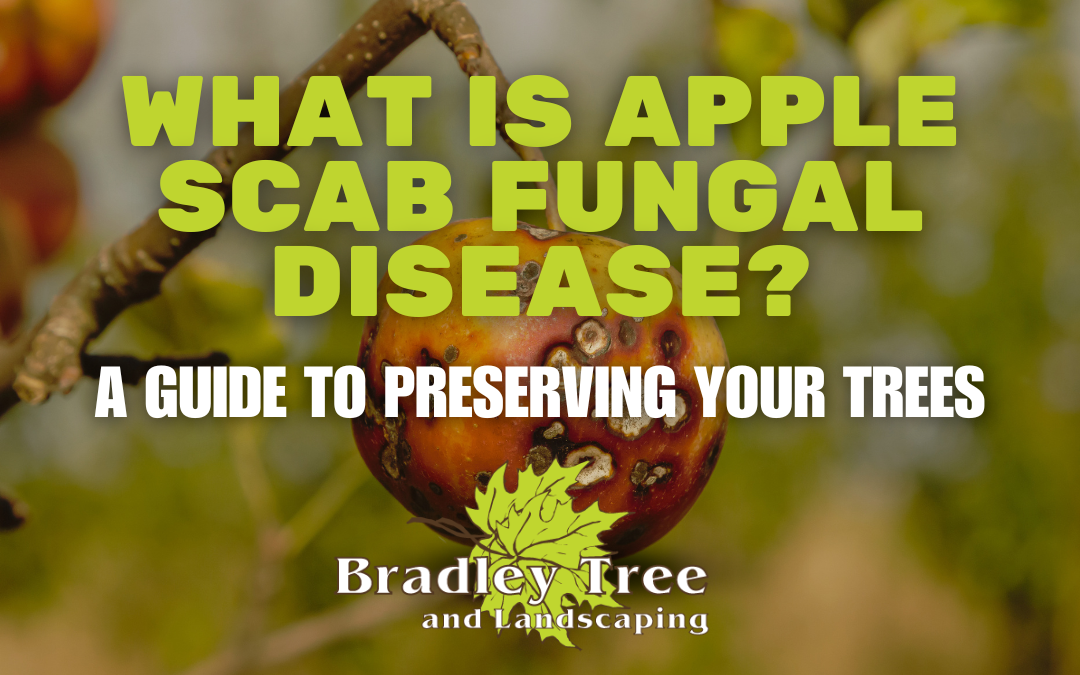
The first symptoms of apple scab appear after leaves begin emerging during the spring. As you see below, small olive-green or light brown spots start developing. These spots will eventually darken more to a browner color or nearly black in some cases. The infected leaves become curled up, yellow, and then fall from the tree far earlier than normal.
When it comes to the apples, it’s going to be a rough development process. You will notice these dark-colored lesions that crack on the outside. If your ornamental apple tree begins losing a large number of leaves by mid-summer, then apple scab is one of the first diseases an arborist will investigate. Our arborists at Bradley Tree have seen this a lot over the years, so call us ASAP if you notice these signs!
When Is Apple Scab Most Active?
In Buffalo and Western New York, apple scab begins during early spring. April through June, depending on the weather, is the range in which it happens most. During this period, cool temperatures create the ideal conditions for the infection to spread. Frequent rainfall increases the chance of spores infecting young leaves and fruit.
Buffalo’s climate favors these conditions. Spring storms, the humidity, and extended periods of damp weather all of which let spores spread. More infections can continue through summer whenever extended periods of moisture occur, making prevention during the early part of the season more important.
How to Prevent Apple Scab
One of the simplest preventative steps in preventing apple scab from spreading is by removing fallen leaves every autumn. Since the fungus overwinters in infected leaf litter, cleaning up beneath the tree reduces the number of spores available to infect new growth the following spring. You want to be as far ahead of it as possible.
Tree pruning is what Bradley Tree can do for you, as far as helping with that new growth. Opening the tree’s canopy allows better airflow and sunlight to reach the leaves, helping them dry faster after rainfall. Because fungal spores require moisture to infect plant tissue, improved air circulation lowers the spread of the disease.
For homeowners planting new trees, selecting disease-resistant apples can significantly reduce future problems. Many modern cultivars have been bred specifically for improved resistance to apple scab while maintaining excellent ornamental beauty or fruit quality.
Can Apple Scab Be Treated?
Once symptoms of apple scab become visible, the fungi prevent new infections rather than reversing the already existing damage. Certified arborists monitor all weather patterns and infection risk to determine the ideal treatment.
For residential properties, treatment also includes tree pruning for infected branches, proper tree maintenance, and removing infected leaves after they fall. Healthy trees are far better equipped to tolerate a disease from spreading than a stressed tree that can’t.
Apple scab is one of the most common fungal diseases affecting apple trees in Buffalo and Western New York, and it’s our job to educate you on its effects. If you’ve noticed anything recently that makes you believe your apple trees have apple scab, let us know. A certified arborist can diagnose the problem and recommend the most effective treatment plan to keep your trees healthy throughout the season. Give us a call, or reach out through our contact form!
Apple Scab FAQ
How can I prevent apple scab from infecting my apple trees?
Apple scab can be treated by removing fallen leaves, improving air circulation through tree pruning around the tree’s canopy, and choosing disease-resistant varieties, which can help prevent its spread.