There are so many different kinds of fungal tree diseases that have been documented around the world. One of them is highly lethal to a specific tree species here in America, so we want to talk about it and educate you on its effects. Chestnut blight is a pathogenic fungus, also known as Cryphonectria parasitica, and it began in East Asia and Southeast Asia and was carried over into parts of Europe and North America in the early 1900’s.
For us at Bradley Tree, it’s our goal in 2026 to help combat these tree diseases from continuing to harm these beautiful pieces of life, and we want to work hard to preserve them in the ways we know best. Tree pruning, tree trimming, and more are all going to help keep chestnut trees alive. We’ve had people call us about this disease before, and the more we educate you about it, the better prepared you’ll be to deal with it.
In this blog, we will look at how to identify and treat the chestnut blight fungal disease, how it affects trees, and when in the season it’s most abundant.
Explaining The Basics of Chestnut Blight
Chestnut blight is a serious fungal disease caused by Cryphonectria parasitica. The disease became widespread in North America after it devastated the American chestnut tree, which was once one of the most important forest trees throughout the eastern part of the United States.
Within decades after the early 1900’s, the disease had killed billions of trees and effectively eliminated American chestnuts as a major forest canopy species. So ya, we are talking about one of the worst fungal diseases you can think of. We want to be able to contribute to stopping it from hurting any more plant life.
The American chestnut tree is highly susceptible to the disease; even the European chestnut can be affected, while the Chinese chestnut tree has a much better resistance to the fungus. Japanese chestnut trees and certain hybrid chestnuts may also demonstrate varying levels of resistance, but for now, the focus is on the American chestnut.
Signs and Symptoms of Chestnut Blight
A proper inspection from a certified arborist can help determine the species of chestnut and whether symptoms are consistent with chestnut blight. One of the biggest symptoms of the disease is a canker sore that develops on the trunk or the branches. The fungus enters through cracks in the bark before developing into living tissue underneath it all (see picture below).
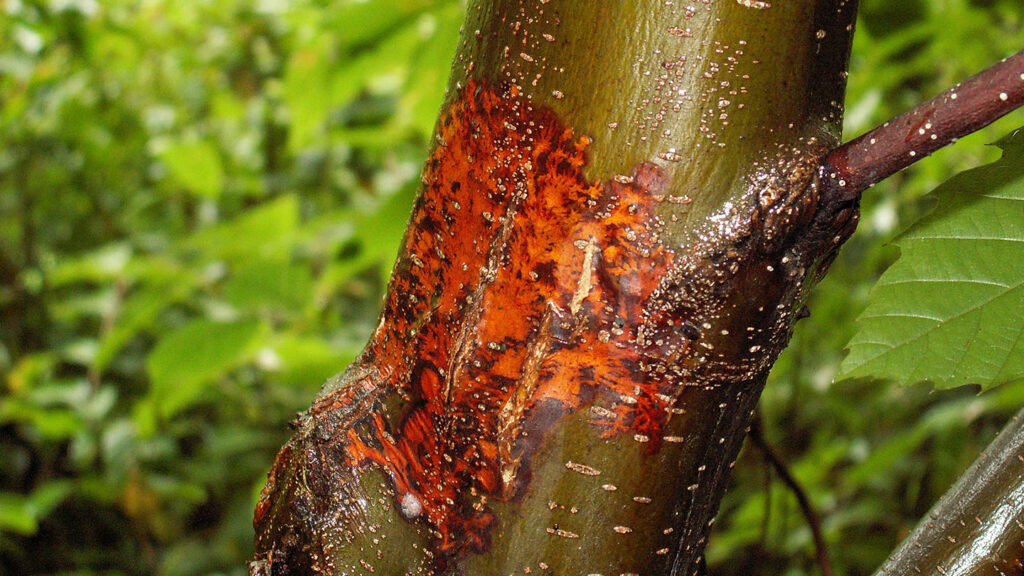
As the canker sore expands, it can eventually girdle a branch or section of the trunk. To girdle means to remove a complete ring of the bark and underlying vascular tissue around a tree’s trunk or branch. This prevents the tree from transporting water and nutrients beyond the infected areas. Branches may begin to die as well, resulting in declining foliage and dead sections throughout the canopy.
Because other tree diseases can produce similar symptoms to chestnut blight, it’s important that homeowners and anyone else who owns property with trees call up for an arborist to come and check it out first before assuming it’s chestnut blight. Once we are able to identify which disease it is, we will take care of it!
One unique characteristic of an American chestnut tree is its ability to survive below ground. Even after the above-ground portion of a tree dies, the root system can still produce new sprouts. They can do this by having dormant buds clustered at their root collar, the zone where the trunk meets the roots underground. Sadly, these buds can become infected too, and eventually they will die as well.
How You Can Treat Chestnut Blight
There is no cure that can restore a severely infected chestnut tree and bring back its ability to keep growing to full health. Managing the effects of the disease depends on its condition, location, and the extent of the infection.
For homeowners and other people who own property, the best place to start is with a certified arborist. Bradley Tree has a great team of experienced arborists who have been identifying tree diseases for years. They can evaluate your trees, look for signs of a disease, and determine whether tree pruning, tree trimming, or tree removal may be the most appropriate options. Those are the three biggest ways we combat diseases.
If infected branches have died, they may become a safety concern, particularly when they are located near your property or if they become a hazard on a driveway, sidewalk, or other areas where people spend time. In cases where a tree has become compromised or poses a significant hazard, removal of the tree may be the safest solution.
Like we keep saying, preservation is our highest priority. Chestnut blight is a disease that demonstrates why we must identify it early and treat it fast. If you notice any of the signs and symptoms we outlined, don’t wait for the problem to become a bigger safety issue.
Bradley Tree works throughout Buffalo and Western New York and other surrounding areas. If you are concerned about the health and safety of your trees on your property, or have any questions about chestnut blight, give us a call and reach out through our contact form! We will get back to you as soon as we can!
Chestnut Blight FAQ
What are the most common signs of chestnut blight on my trees?
The most common signs of the chestnut blight fungus are when you notice canker sores on the trunk or the branches. This can indicate that the branches are dying, there’s declining foliage, and the canopy is also declining in health. Since other diseases can produce some of the same symptoms, a certified arborist should be required to come and inspect your trees for an accurate diagnosis.