With the winter season (hopefully soon!) coming to an end, it’s time to get back into the swing of things when it comes to spring tree care here in Buffalo and Western New York. Today’s topic deals with a goal of ours that we want to set for Bradley Tree and everyone we serve in 2026, which is tree preservation and plant healthcare in general.
We are known for our work in trimming and pruning trees, but we also work to make sure that the plant life you have around you is sustainable and lasts. One of the best ways to get this ball rolling as the spring season starts is by using mulch on your trees and plants. Mulch carries so many benefits with it for all plants alike, and that’s what we want to dive into today! There are some misconceptions about mulch that we aim to help clear up and educate you so you can keep your plants healthy this spring & summer!
In this blog, we will give you a tree preservation guide on how we would like to see you use mulch on your trees this spring, moving forward as 2026 progresses.
Why Mulch is Good for Tree Health
When you think of mulch, it’s usually associated with shrubs or garden plants, not necessarily trees. The goal of this blog is to make sure that the idea is planted (pun intended) in your head, that you should consider using mulch on your trees now and then to keep them healthy and preserved.
When it comes to both planting a tree for the first time or caring for one that’s already been planted, three major health benefits get lost in conversation when people are told about what mulch can do.
The Three Major Benefits to Using Mulch for a Tree:
- Mulching helps with a tree’s nutrients
- Retains moisture that helps with tree growth
- Protection against weeds, pests and other factors that can harm it
If you’ve ever seen mulch around a tree, that’s why weeds aren’t growing, and usually the healthiest of trees are the ones that have mulch spread throughout the base of it. They don’t look like they are diseased either.
Protection goes a long way for a tree, as there are plenty of circumstances that could hurt its long-term growth and prevent it from lasting for years on end. It’s how the oldest trees in the world have lasted as long as they have. We mentioned weeds as something mulch protects from, and weeds are bad because they rob plant life of the nutrients they need to grow.
They are not allowed to share, and weeds aren’t a good look on your lawn either. If you’re doing some form of lawn care, mulch outlines an area around the tree that makes it off-limits for where you can do something like mowing the grass.
Mulch is so important for retention in the soil! When you apply mulch, it retains water and prevents it from running away from the area you’re watering. This then affects the nutrients the tree receives. It helps with root expansion, and it improves soil quality. Soil is different from mulch; that is a distinction that should be made. One is the protective layer, and the other is the layer underneath being protected to ensure the tree grows.
Types of Mulch and What Trees They Work With
Having a fundamental understanding of mulch will make this next part of the process easier, which is to make sure you’re using the right mulch. There are multiple types of mulch, all of which may work for various types of trees.
You are going to want to try to stay away from dyed mulch, as dye in mulch isn’t something organic that should be going into your soil.
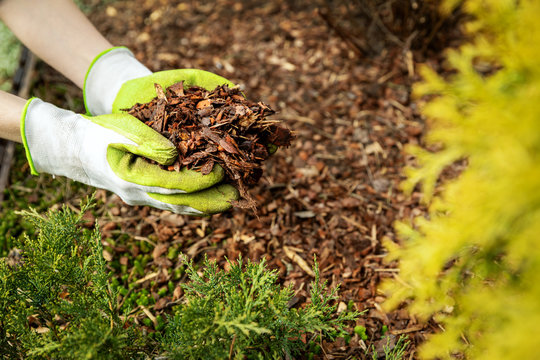
There’s organic mulch, which consists of wood chips, bark, leaves, and compost, and then there’s inorganic mulch, which consists of stone or rubber pellets. When you read stone and rubber, you might be taken aback, but it works best for suppressing those weeds and doesn’t harm the tree.
Bark and wood chip organic mulch is great for trees because not only do they break down quicker than other mulch types, but they are cheaper from a cost perspective if you’re looking for an easy option. There are lots of pine trees in and around Western New York, and if you have any near you, pine needles can work great as a type of mulch to use.
How Often Should I Mulch My Trees?
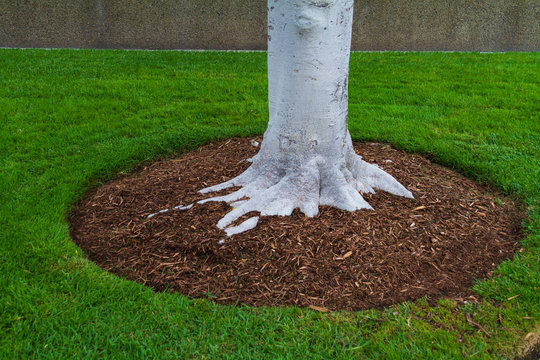
There is a proper way to handle placing mulch, and we want to explain it in detail. 2-4 inches around the root ball (mass of roots) of a tree, and not around the trunk, is a good measurement for the most effective layer of mulch. Make sure it’s in a donut shape, not a volcano-looking one. Make sure it’s not touching the tree stems either, or else it’s going to rot, and that’s not what we want.
A common thing people do is that they mulch every year once the seasons begin for you to do so; that’s wrong. You don’t need to mulch every year, just flip it instead. Old mulch creates a good layer still, so that water can still get through, and then you’ll eventually reapply a new layer. The point is to add organic mulch; you want it to decompose, which helps it. It’s not just there to make your lawn look pretty; it’s to help it grow better. Finally, make sure your mulch is not dyed! Chemicals in it can be deadly to the trees.
Mulch offers so many benefits based on the details we listed here. If you are looking for information about your trees, you can always reach out to us through our contact form or give us a call, and we will be sure to get back to you as soon as we can!
Tree Mulch FAQ
What are the major benefits that mulch brings to trees?
The three major benefits to using mulch for your trees are retaining moisture from watering them, which makes the second benefit improve, which is helping nutrients to grow into the tree and not be taken away by weeds, which is the third benefit, protection. Mulch offers great protection for trees in all matters of long-term growth, and this is why we recommend you use it!
Why would I use mulch on a mature tree?
Mulching a mature tree mimics a natural forest floor, providing critical benefits that protect and enhance long-term health, growth, and stability.