Today, let’s talk about a particular tree that you’re probably not too familiar with by its name, but you definitely have it in and around your yard, whether it’s your business or your home. Here in Buffalo and Western New York, the honeylocust is one of the most common tree species. One that is fairly common in urban environments, but can also be found in rural ones too. They are a resilient type of tree that can fend off pollution, road salt, drought, and anything a city landscape can throw at it.
But that’s not the biggest reason why we are here! We are here to explore something that will become more common during the summer season, now that it has begun, and that’s the presence of the honeylocust bug. 2026 for us at Bradley Tree is about educating people on tree preservation and the types of trees we will get calls about to preserve and treat. Given how common the honeylocust tree is in our area, it’s time to look a little deeper into it, along with a circumstance that could raise problems for it if it gets to that point.
In this blog, we will give you a complete guide to the honeylocust tree and the honeylocust bug that affects it.
Understanding Honey Locust Trees in Buffalo and Western New York
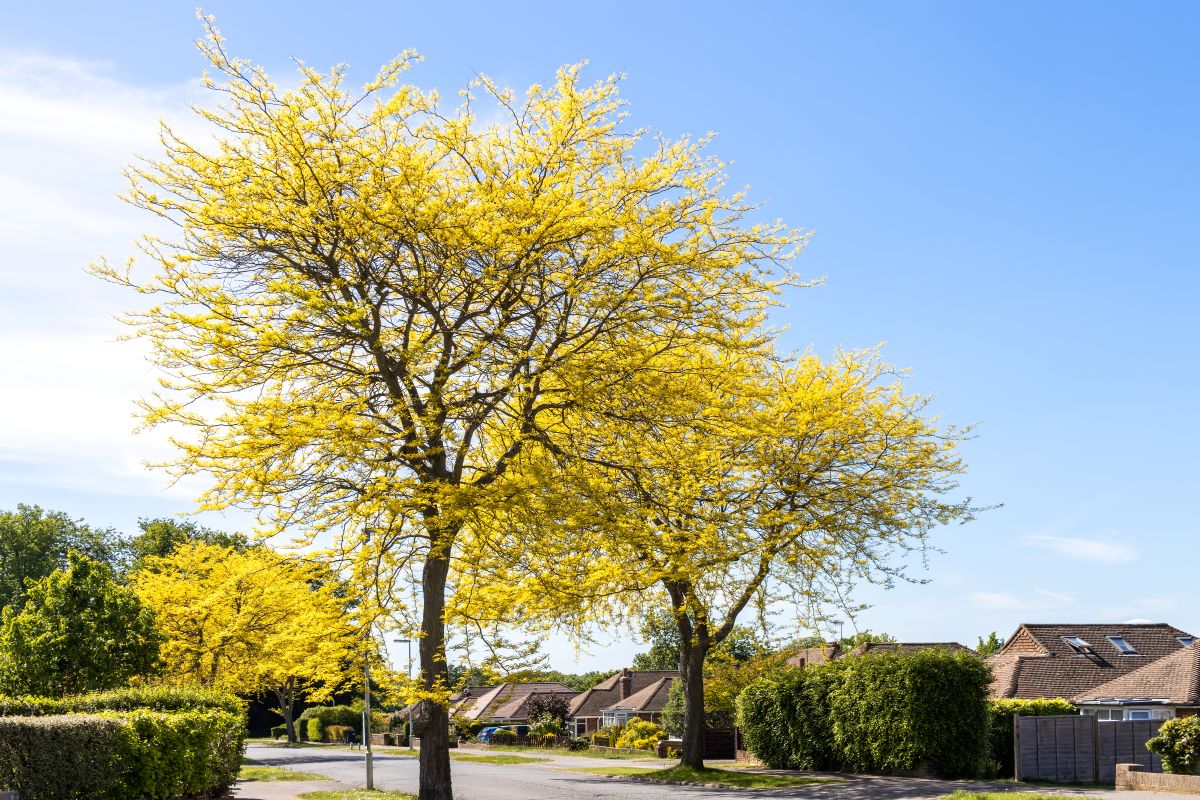
Photo credit: https://ecotreecompany.com/product/sunburst-honey-locust/
Almost every tree has an insect or mite-like pest that comes in and disrupts the flow of a tree’s growth. Honeylocust bugs are more of a cosmetic disruptor and rarely kill the tree, but that doesn’t mean we can just let it go untreated if it gets to that point. Teaching people about the tree’s growth cycle and how the honeylocust bug affects it will help themkeep their landscapes healthy.
Honeylocust trees grow very fast. Depending on the health of one, they can grow up to 1-2 feet in length each year. During the spring, these trees produce a big canopy, and when summer comes around, they flourish in their appearance and ability to stay healthy. They really are the perfect tree for a wide range of urban and residential landscapes.
If you’re someone who wants to have one planted around your property, follow through on these tree planting rules:
- Plant it with soil like clay soil, loam soil, or any sandy type of soil (preferably a moist and well-drained form of soil)
- Make sure it gets ample amounts of sunlight for full canopy growth, and if it’s planted in a shadier area, then it won’t see good enough growth
- While the tree is being established in your yard, it will only need a moderate amount of watering (once it starts maturing, it won’t need much watering unless extreme heat starts affecting it)
- The best time of the year to start planting a honeylocust tree is in the early spring or sometime in the fall
A Guide to the Honeylocust Bug and Protecting Your Trees
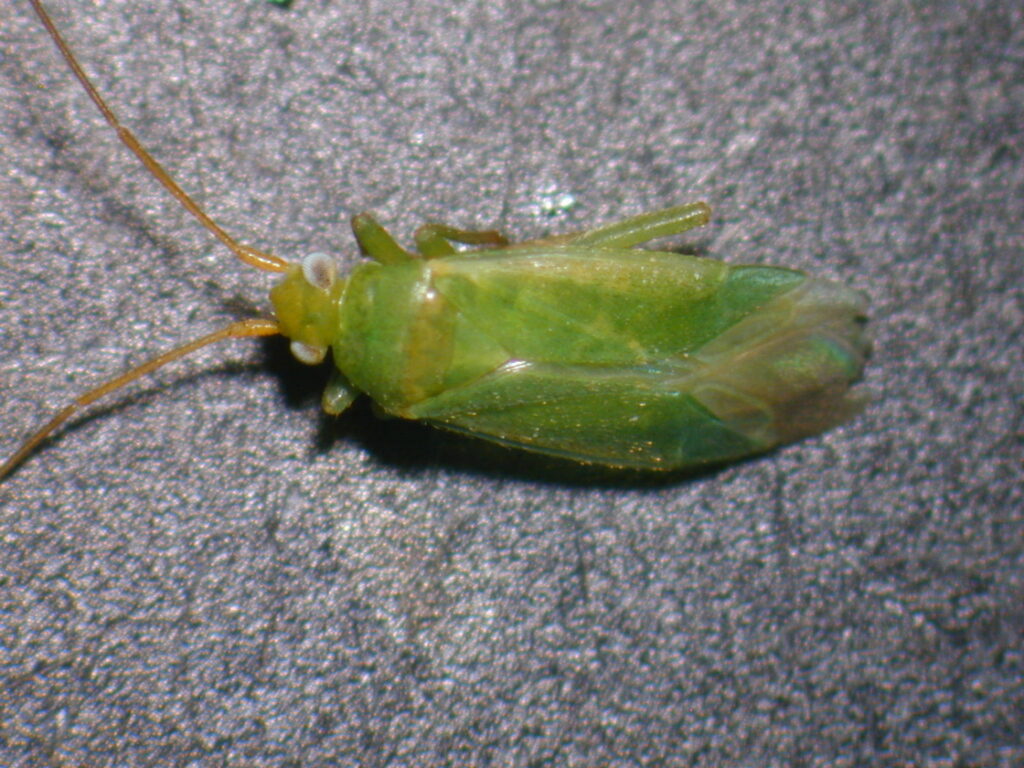
Photo credit: https://mortonarb.org/plant-and-protect/tree-plant-care/plant-care-resources/honey-locust-plant-bug/
The honeylocust (or Diaphnocoris chlorionis) is best identified by its nymph-like body, and adults are pale green and blend in with leaves. These little critters do what lots of insects do to trees, which is suck out the sap and juices in the leaves, turning them a different color. They can plant themselves in the trees during winter and then sprout during the spring and start feeding over summer.
The feeding damage you will see is primarily during the early summer months of May and June, so start inspecting now! The reason why is that honeylocust trees have their biggest periods of growth in these months. This insect only produces once a year, and by mid-summer, they will have disappeared once they are done feeding.
Like we just noted, you’ll notice their damage when there are small white and yellow spots on the leaves, which is known as the stippling condition (when they suck out the juices in the leaves). A heavy feed from these insects can cause damage to the small branches and inhibit the tree’s development. So even though they do more cosmetic damage, the health of the tree can rarely be in jeopardy. If it’s not treated over several years, then death is a possibility.
So you’re probably asking then, how do I treat the honeylocust bug? If you can detect this insect early on, give one of our arborists at Bradley Tree a call ASAP! We can come out and inspect the tree and give you a diagnosis.
We know the right time to stop them, particularly when they are in their bud break (the moment when a plant’s winter dormancy ends and its buds swell and open). Besides early detection, be sure to follow the normal plant healthcare routines. Water it, add new mulch every now and then, and have us come out to do tree pruning on the branches. In the first few years of this tree’s growth, you’ll see some balanced branching, and pruning it once mature will be needed.
Honeylocust trees are absolutely beautiful trees! We want to preserve them as much as possible, given how much more beautiful they make the Buffalo and Western New York regions. Give us a call if you have any questions, or reach out through our contact form, and we will be sure to get back in touch with you as soon as possible!
Honeylocust Bug FAQ
Can a honeylocust plant bug kill my honeylocust tree?
Honeylocust plant bugs are more known for cosmetic damage, but the damage they do can still weaken a tree over time. Honeylocust trees can recover from minor feeding damage, but repeated stress can make them more vulnerable to other pests, diseases, and environmental challenges. If you notice widespread leaf damage from these bugs during the spring or early summer, it’s a good idea to have a certified arborist inspect the tree and recommend treatment options.